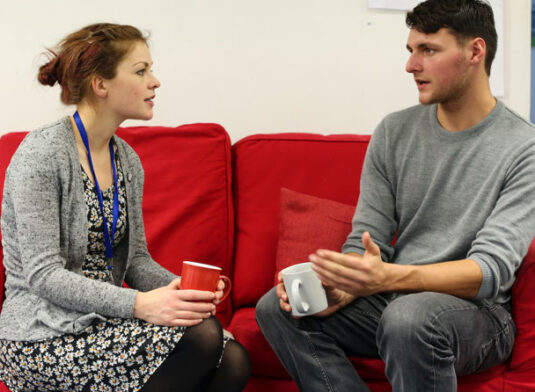

“When I first came to Clock Tower, I had just left somewhere I couldn’t live anymore. I was in a lot of different places then; emergency accommodation and other places like that, so very unstable and not a particularly safe environment. So, I think being able to come to Clock Tower, it was a help just having that space where I could talk to somebody if I needed to, or for really practical things like doing my washing, getting a free lunch, small things like that. When you don’t really have any money, and you’re not even sure where you’re going to spend the night, let alone where you’re going to find lunch… I don’t really know where I would be, to be honest, without that support. It’s such a big part of my life, even now.
“So after about eight months of me being in really unstable situations, living in lots of different emergency accommodations, rough sleeping for some of it, sofa surfing or living in squats… after eight months, I was able to get into supported housing for the first time; that was a huge achievement, and that was whilst I was being supported by Clock Tower.
“I think a big part as well has been rebuilding myself, my confidence and my ability to believe in myself. Because I think, when you go through something like that, it can be so damaging to your self-esteem, and you just feel powerless; you don’t really feel like you have any agency. So really, one of my main achievements while being here has been being able to rebuild that. And I think that being part of the Youth Voice Group has really helped with that, getting to be involved in like shaping what we do, that’s been really great and I’m really proud to be a part of that.
“I would also say building more skills around employment and feeling more empowered in my journey. It’s made me feel more confident in working towards the aims and goals that I have in terms of my career and my professional life. Some people do work while they’re homeless which feels like a bit of a paradox, but a lot of the time you can’t really even start to think about that kind of stuff, because you need a safe place to stay, you need food, you need water, you need shelter before you can even think about self-actualisation. Once I got into accommodation, then I was able to focus more on what I wanted to do with my life.
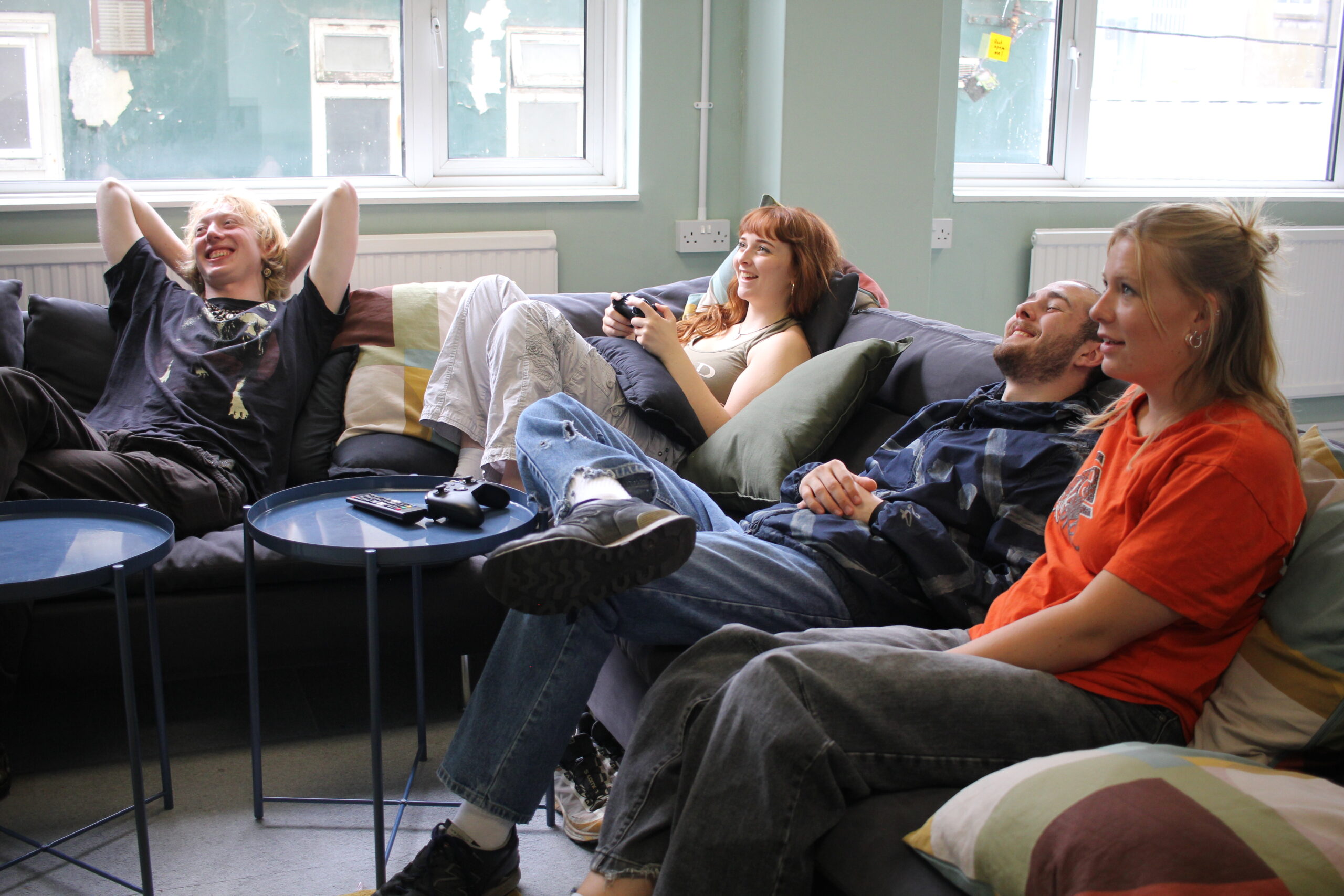
“Now I’m able to do freelance stuff and I’m working on a business that I want to grow. I went to some training at CTS in the Youth Voice Group sessions around how to build your confidence. That can be used in lots of different situations, in like interviews or giving a presentation about a project that you’ve done, so that’s been another big achievement.
“Clock Tower’s a place you can go and get support. It just feels like a safe space, and it feels like you’re genuinely being listened to, and like your individual experiences are being valued and respected. Because other places sometimes, you go for support, but you’re just sort of told things; it’s very informational, and while that’s helpful in one way because you need the information, it can also be a bit patronising in their approach. And that doesn’t really make you feel like you have any agency because you’re just being shouted at to do all these things.
“If you’re having a session with a keyworker, you can just pause, sit down, talk about your day or how a meeting went for you. It doesn’t always have to be the practical things; I think building the emotional awareness around what you’re going through is a really big part of it as well, and having that emotional support, well for me, was so helpful. Especially with how interlinked mental health is with addiction and trauma. For people who go through homelessness, it’s so hard, but it’s even harder when you have no one; if someone’s become homeless through like family breakdowns or abusive relationships, then you literally don’t have anyone, and that’s really isolating.
“In terms of the practical stuff, you can come in, have a keyword session, get advice or just have a chat, you can have lunch, have a shower here… that was amazing when I was rough sleeping because nobody wants to be walking around all day just feeling horrible. You can come here, take a shower, take a snack with you before you head back out, and it just makes it slightly easier to deal with your situation. It’s those little things that make it a tiny bit easier to get through each day.”
“Being in a space that understands how difficult it is what you’re going through, and that there are other young people who are all going through or have gone through the same experience, that’s really powerful in itself. Homelessness is such an isolating experience, like you’re going through it alone. I’ve made friends with people, people I’m still friends with now, just through being here and talking to them back when I was in that situation.
“I think the hardest thing was just being expected to do absolutely everything. When I was homeless, I was literally like having to do all of this research, make all of these phone calls to people, go to all of these different places. And a lot of the time, those other services wouldn’t get back to me or they wouldn’t update me. I had to be the one chasing constantly, chasing how to get out of this, in that constant survival mode you’re in and having to constantly, constantly be on it, even though you literally have nowhere to live and feel like your life is falling apart… You shouldn’t be expected to have to do all of that. You have to fight for yourself so, so, so much, and some people just literally can’t keep doing it and will just stay homeless for years and years, because the people who were meant to help them, just didn’t.
“My experience with navigating being labelled as intentionally homeless by the council, that was really traumatic to go through. Even just the wording of that, “intentionally homeless”, like I’d chosen it. And early into my situation, trying to get support from family or just talk to them about what I was going to do, literally having a family member say I’d put myself in this position which could not be further from the truth… I’ll never forget that.
“It feels like society makes it feel like it’s your fault that you’re in this position, but a lot of the time, people end up homeless because of interpersonal situations breaking down, or abusive situations that they’ve made the decision to escape, which is amazing, but then you’re almost like villainised for taking that step for yourself.
“Homelessness doesn’t discriminate. You could be working one minute in a stable job, and the next minute, you could end up homeless because your landlord decides to raise your housing, or you’re sick and can’t go back to work. Everyone really is only a few steps away from potentially being in the same situation, so I feel like the fact that there’s not more empathy for people and what they go through is kind of shocking.
“Coming here has been so integral to my life now, even now – four or five years later.
“The supported accommodation that I’m in now, I didn’t even know about until someone around the table at Clock Tower just brought it up in a discussion at lunch. When I was homeless, if I’d not had support or been able to come here that first time, I think it would have been so much harder to keep going, and to keep believing that I could find a way out of what I was going through. It would have felt so much more isolating without making those connections and friendships I found here.
“Without this place, my life now as it is, and the path I’m on, would be totally different… maybe I would still be homeless, I honestly don’t know, but I’m glad I’m not. And I’m glad that CTS does exist, and I wish that there was more of the work that you do all over, like in the specific way that this place is so understanding and trauma-informed and accessible. It never feels like there’s a pressure to be a certain way or say the right thing; you can just be, and I think that’s so freeing in itself.
“You just feel valued, like you matter, even though after this, you know you’ll have to go back outside and sit in a corner while people just walk past you. With CTS, my life has definitely changed for the better, like 100%. I might have not escaped the situation and the crisis I was in, and I’m glad that I did, that I didn’t slip through the cracks, because of CTS and because of the support that empowered me to build myself up and get through it.”
Rose, 24 (she/they)